From Ideas to Sound: How AI Music Generator Is Reshaping the Way Music Is Created
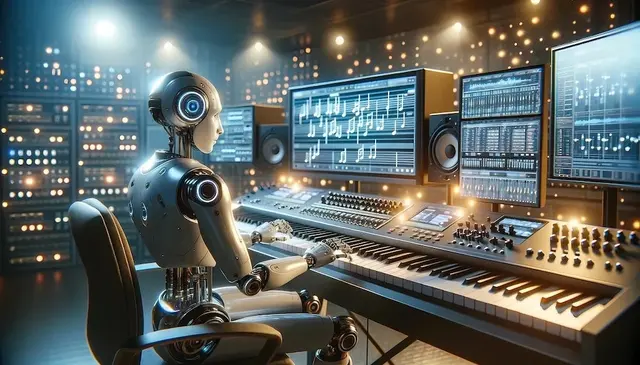
The hardest part of making music today is often not the tools, but the gap between imagination and execution. You may hear a melody in your head or feel a mood you want to express, yet translating that feeling into a finished track can be slow and technically demanding. This is where AI Music Generator changes the equation. By turning written ideas directly into music, it lowers the barrier between creative intent and audible result, letting text become the starting point of sound rather than a rough note on the side.
Understanding the Core Idea Behind Text to Music AI
Text to Music AI is built on a simple but powerful premise: language already contains emotional and structural signals. When described clearly, those signals can be translated into rhythm, harmony, and melody.
How Language Becomes Musical Structure
Under the hood, the system analyzes your text for mood, pace, and stylistic cues. Emotional words suggest harmony and tempo, while descriptive phrases influence instrumentation and arrangement.
Semantic Signals and Musical Decisions
Rather than choosing random notes, the model maps meaning to structure. Calm descriptions tend to result in slower tempos and softer textures, while energetic language pushes the output toward rhythm-heavy compositions.
Why This Approach Feels Different From Traditional Music Tools
Conventional music software assumes technical literacy. Text to Music AI assumes creative clarity instead.
Reducing Technical Friction
You do not need to understand chord progressions or MIDI routing. You only need to explain what the music should feel like.
Creativity Over Configuration
This shift allows creators to spend more time refining ideas and less time navigating complex interfaces.
A Practical Look at the Official Workflow
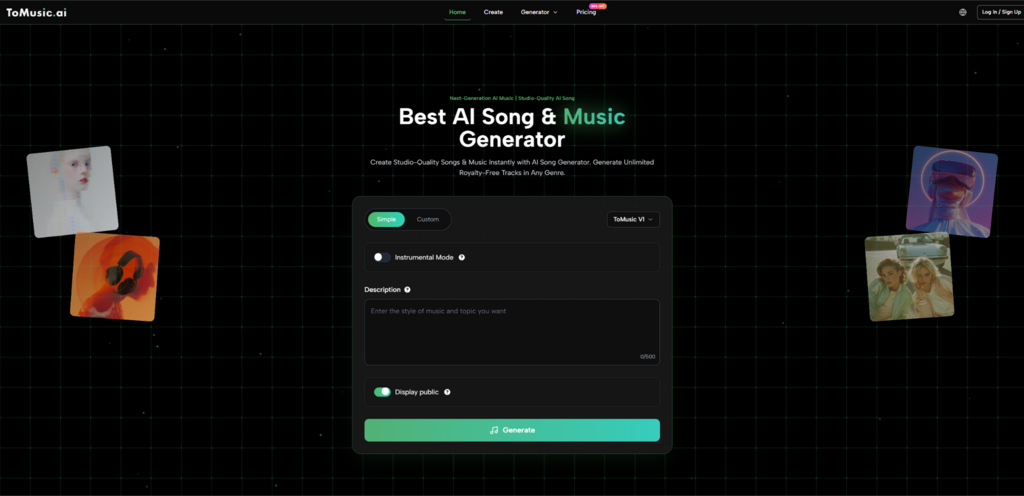
The platform follows a clear, minimal process that mirrors how people naturally think about music.
Step 1: Describe the Musical Idea
You begin by entering a text prompt that explains the mood, theme, or lyrics you want to turn into music.
Clarity Matters More Than Length
Short, focused descriptions often produce more coherent results than long, unfocused text.
Step 2: Choose a Musical Direction
After entering text, you select a general style or mood direction provided by the platform.
Guiding Without Overcontrolling
These options act as guardrails rather than strict rules, keeping the output aligned with your intent.
Step 3: Generate and Review the Track
The system processes the input and produces a complete musical piece.
Listening as Part of Creation
Playback is not the end but part of an iterative creative loop.
Step 4: Export for Real Use
Once satisfied, you can download the generated track for use in your project.
From Concept to Asset
At this point, the music becomes a practical asset rather than a sketch.
Who Benefits Most From Text to Music AI
This approach appeals to creators who value speed, experimentation, and accessibility.
Content Creators and Storytellers
Music becomes a storytelling layer that can be generated on demand.
Matching Mood to Narrative Quickly
Instead of searching libraries, creators can generate music that fits a specific scene.
Musicians Exploring New Workflows
Even experienced musicians use it as a sketchpad.
Idea Generation Without Commitment
It allows rapid exploration before investing time in full production.
Limitations Worth Understanding
Text to Music AI is powerful, but not magical.
Control Versus Automation
You trade some fine-grained control for speed and simplicity.
Knowing When to Use It
It works best for ideation, background music, and fast iteration rather than detailed orchestration.
A New Creative Baseline
Text to Music AI does not replace musicianship. It reframes where creativity begins. By letting words turn directly into sound, AI Music Generator introduces a workflow where imagination moves faster than technique, and that alone reshapes how music creation feels in practice.