Communication Skills: Definitions and Examples
Strong connections and fruitful interactions in both our personal and professional life are built on effective communication. However, what precisely constitutes effective communication and why is it so crucial? This blog article will go over the various components of effective verbal and non-verbal communication, look at some real-world instances, and highlight the advantages of acquiring this crucial ability.
Definition of Good Communication
A key component of good communication is the capacity for both active listening and the interpretation of the messages of others. Both verbal (spoken or written) and non-verbal (gestures, body language) types of communication are used in this two-way exchange.
Why Good Communication is Important
In order to establish trust, promote understanding, resolve disagreements, and facilitate more effective problem-solving, effective communication is essential. Effective communication is the key to successful collaboration, boosted output, and all-around satisfaction in both personal and professional settings.
Examples of Good Communication
Verbal Communication – Clear language, suitable tone, precise wording, active listening techniques, and the use of clarifying questions to guarantee understanding are all part of effective verbal communication. For instance, a project manager may give detailed directions to their team members during a team meeting at work while also seeking input and summarizing the main points.
Non-Verbal Communication – Facial expressions, gestures, body language, eye contact, and posture are all examples of non-verbal communication. One illustration of effective non-verbal communication might be someone nodding in agreement while maintaining eye contact or showing involvement with open body language.
Benefits of Good Communication
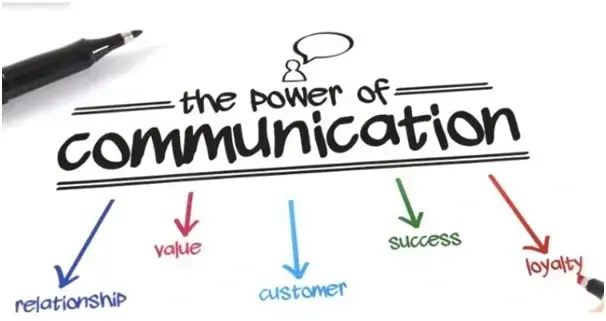
Enhanced Interactions – Good communication abilities promote mutual trust and understanding. Relationships develop stronger and more rewarding when people are able to articulate their opinions and feelings while also actively listening to others’ perspectives.
More Problem-Solving Efficiency – It is simpler to identify issues, explore potential solutions, and arrive at well-informed judgments when people can express their concerns and thoughts in a clear and concise manner. Effective problem-solving is made possible through good communication, which eventually produces better results.
Productivity Growth – Effective communication fosters a collaborative work atmosphere where team members may exchange ideas and coordinate their efforts in professional settings. As a result, productivity rises and the organization as a whole prospers.
Conclusion
Overview of Effective Communicating Last, effective communication entails speaking properly and paying close attention to what others are saying. It includes both verbal and non-verbal clues and is essential for developing solid bonds, productive problem-solving, and enhanced output.
Advantages of Excellent Communication Practice People can grow in their careers, improve their personal relationships, and create a favorable environment in both their personal and professional life by developing and using effective communication skills. Being a successful communicator requires time and practice, just like learning any other talent, but the rewards are well worth the effort.
Faq:S
1 What constitutes effective verbal communication? – Effective verbal communication requires speaking clearly and concisely, making eye contact with the person you are speaking to, and paying attention to what they have to say. For instance, a project leader might explain goals and strategies during a team meeting by speaking clearly, being assertive, and encouraging team members to ask questions to ensure their knowledge.
2 What constitutes effective written communication? – It involves expressing ideas clearly and concisely while using appropriate grammar, spelling, and punctuation. An illustration would be a well-structured email where the author uses paragraphs to differentiate various ideas, bullet points to highlight crucial information, and a courteous tone to deliver their message.
3 What part does effective nonverbal communication have in communication? – Nonverbal communication reinforces messages using body language, gestures, facial expressions, and tone of voice to support verbal communication. A person who makes adequate eye contact during negotiations to demonstrate confidence in the proposition they are giving would be an example of this. Another illustration would be someone advancing during a conversation to demonstrate interest and attention.
4 What is an excellent communication example of active listening? – Active listening entails paying close attention to the speaker while also expressing understanding or encouraging further discussion of the topic through verbal or non-verbal clues. An illustration would be nodding your head in agreement during a talk or asking perceptive follow-up questions for clarity.