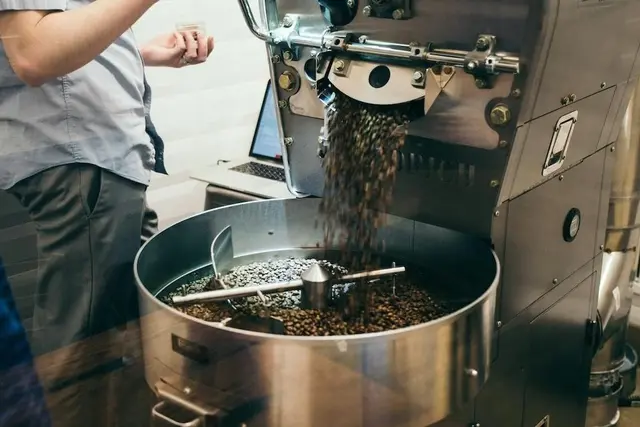
The Coffee Roasting Machine: From Green to Gourmet
Transforming green coffee beans into gourmet roasted coffee is the roaster’s job. Using precise temperature control, it crafts a unique roast profile. From a simple home roaster to a robust commercial roaster, this machine is key to unlocking all delicious flavors and aromas from raw beans.
The Roasting Journey: First Crack, Second Crack, Development Time, and Sensory Evaluation
The journey of roasting coffee is marked by distinct phases, crucial for developing the final flavor. It all begins with carefully applying temperature control to the beans. The first pivotal moment is the first crack, an audible popping sound occurring as moisture rapidly escapes the bean, indicating the start of true roasting. This phase is essential for defining the bean’s potential, setting the stage for its ultimate roast profile. Pushing further, the second crack signals deeper roast levels, often heard as a more subtle, crackling sound. Reaching this point means the cellular structure is breaking down further, moving towards darker roasts, reducing acidity and increasing body.
The period between these cracks, and shortly after the first crack, is known as development time. This critical window dictates the internal bean development, impacting sweetness, acidity, and bitterness. Proper development time ensures the coffee isn’t underdeveloped (grassy, sour) or overdeveloped (ashy, hollow). Mastering this requires skill and precise adjustments to achieve the desired roast profile.
Ultimately, the success of the roast is confirmed through meticulous sensory evaluation. This involves cupping and tasting the roasted coffee to assess its aroma, flavor, body, and finish. By comparing the results against desired standards, roasters ensure consistency across batches, fine-tuning their approach. This feedback loop, combining careful observation of first crack, second crack, and managing development time, with a thorough sensory evaluation, is what transforms raw beans into a truly exquisite cup, embodying the perfect roast profile. Every adjustment in temperature control during these stages contributes significantly to the final taste experience, making each roast a unique exploration.
Key Components and Operation: Heating Element, Airflow, Chaff Collector, Cooling Tray, and Temperature Control
At the heart of any coffee roasting equipment, whether home or professional, lies the critical interaction of its main components. The heating element generates the intense heat needed to transform green coffee beans. This can be an electric roaster element or a flame in a gas roaster, providing the necessary energy for the chemical changes during roasting. Precise temperature control is paramount; it allows for meticulous management of heat throughout the roasting cycle, directly influencing the final roast profile and preventing scorching or under-roasting. Modern machines often feature advanced systems, greatly aiding overall consistency.
Equally vital is proper airflow. This component circulates hot air evenly around the beans, ensuring uniform heat distribution and preventing hot spots. Beyond even roasting, airflow also plays a critical role in removing smoke, moisture, and odors released during the process, contributing to a cleaner, clearer flavor in the final roasted coffee. Without adequate airflow, beans can taste smoky or baked.
As beans roast, they shed a thin, papery layer called chaff. The chaff collector captures this lightweight byproduct, preventing it from recirculating and burning, which could impart an undesirable taste or pose a fire hazard. After roasting is complete, rapid cooling is essential to stop beans from continuing to cook from residual heat. This is where the cooling tray comes into play. Typically, it’s a perforated tray with a powerful fan underneath that quickly draws ambient air through the hot beans, bringing their temperature down rapidly. This swift cooling locks in developed flavors and aromas, preserving the integrity of the carefully crafted roast profile. Together, these essential elements ensure a smooth, controlled, and safe roasting operation for any batch size.
Types of Roasters: Drum, Fluid Bed, Gas, and Electric
Diving into roaster types, we encounter the classic drum roaster, known for its indirect heat, and the innovative fluid bed roaster, which uses intense airflow. Roasters can also be categorized by their energy source: the powerful gas roaster or the versatile electric roaster. Each offers unique approaches to temperature control for your ideal roast profile.
Drum Roasters: Batch Size, Production Volume, and Roast Profile Consistency
Drum roasters are the classic choice, famous for handling diverse batch sizes, from a small home roaster to a substantial commercial roaster. These machines feature a rotating drum that tumbles green coffee beans, ensuring even heat exposure. This indirect heating, coupled with precise temperature control, allows for nuanced development of the desired roast profile.
Regarding production volume, drum roasters scale effectively. Smaller units suit hobbyists, while larger industrial models roast hundreds of kilograms per hour, meeting high demands for roasted coffee. Their enduring popularity stems from their capacity for remarkable roast profile consistency. Experienced operators finely tune parameters like drum speed, airflow, and heat to replicate specific flavor outcomes repeatedly.
Achieving this consistency blends experience and technology. While some prefer the tactile engagement of manual controls, allowing real-time adjustments based on sensory feedback, many modern drum roasters incorporate advanced automation. Automated systems precisely follow pre-programmed roast profiles, monitoring and adjusting temperature control to ensure each batch mirrors the last. This mix of traditional mechanics and modern precision makes drum roasters versatile and reliable for producing high-quality, consistent roasted coffee, regardless of batch size or required production volume. Their robust design and predictable heat transfer are cornerstones, enabling roasters to craft unique, repeatable flavor experiences from various green coffee beans.
Fluid Bed Roasters: Speed, Automation, and User Interface for Control
Fluid bed roasters excel in speed and direct heat transfer. Unlike a drum roaster, they use powerful, heated airflow to suspend green coffee beans, creating a “fluidized bed.” The heating element (often an electric roaster) provides rapid heat, ensuring quick roasting cycles. This swiftly develops the desired roast profile. They are efficient for various batch sizes and high production volume of roasted coffee, emphasizing fast turnarounds and consistent output.
A key strength is advanced automation. Sophisticated user interfaces allow programming intricate roast profiles. Precise airflow volume and exacting temperature control are digitally managed. This ensures remarkable consistency, letting each batch meet specifications without extensive manual controls. The intuitive user interface provides real-time data for monitoring and fine-tuning. This leads to highly repeatable results, crucial for optimal development time and successful sensory evaluation.
Vigorous airflow ensures even bean roasting while efficiently carrying away chaff. Most fluid bed roasters integrate a chaff collector, separating this byproduct to prevent smoky flavors. Post-roast, a rapid cooling cycle is vital, involving a dedicated cooling tray and powerful fan, quickly reducing bean temperature. This immediate cooling halts the process, preserving delicate flavors. This blend of speed, precise automation, and user-friendly control makes fluid bed roasters an excellent choice for efficiency and exact roast profile consistency for any home roaster or commercial roaster, optimizing capacity.
Choosing and Maintaining Your Ideal Roasting Machine
Choosing your ideal roaster involves weighing capacity against your budget, considering desired features. For longevity, focus on durability and ease of maintenance. Proper ventilation, including the exhaust system, and understanding power requirements are crucial for safe operation, whether using manual controls or automation.
Selection Factors for Home and Commercial Use: Capacity, Budget, Features, and Durability
When selecting a coffee roasting machine, whether for a modest home roaster setup or a bustling commercial roaster operation, several critical factors come into play: capacity, budget, features, and durability. These considerations guide your choice between a simple appliance and a sophisticated industrial unit.
First, capacity is paramount. A home roaster typically requires a smaller batch size, sufficient for personal consumption of green coffee beans, often ranging from a few ounces to a pound. Conversely, a commercial roaster needs significant production volume, handling larger batch sizes to meet customer demand for roasted coffee, potentially hundreds of pounds per hour. This directly impacts the necessary machine size and power.
Next, your budget defines the playing field. Home roaster options are generally more affordable, ranging from basic electric roaster models to compact drum roasters. A commercial roaster demands a substantially higher investment, not just for the machine itself, but also for crucial infrastructure like proper ventilation, an efficient exhaust system, and specific power requirements, especially for powerful gas roaster models.
Then, consider the essential features. A home roaster might prioritize user-friendly manual controls and basic temperature control to explore different roast profiles. Key components like a chaff collector and a rapid cooling tray are usually included. A commercial roaster, however, requires advanced automation, precise temperature control, and a sophisticated user interface for managing complex roast profiles with high consistency. Robust heating elements and efficient airflow are critical for consistent first crack and second crack development, optimizing development time and facilitating accurate sensory evaluation.
Finally, durability is crucial for long-term satisfaction. While a home roaster needs to be well-built for intermittent use, a commercial roaster must withstand rigorous, continuous operation. Industrial-grade materials and construction ensure longevity, minimizing downtime and maintenance issues, which are vital for sustained production volume and profitability.
Installation Essentials: Ventilation, Power Requirements, and Exhaust System
Proper roaster installation, for a home roaster or commercial roaster, relies on robust ventilation, precise power requirements, and an efficient exhaust system. Neglecting these compromises safety, air quality, and the final roasted coffee quality.
Ventilation is crucial. Roasting green coffee beans creates smoke, heat, and particulates, especially during first crack and second crack. A strong exhaust system safely removes these. For a commercial roaster, this means dedicated, high-volume extraction with specialized ductwork and powerful fans, preventing smoke and VOC buildup. Even a home roaster needs adequate airflow, often a strong range hood, for a safe environment. The roaster’s chaff collector depends on this system to pull away chaff, reducing fire risks and keeping the roast clean.
Understanding power requirements is also vital. An electric roaster for smaller batch sizes needs specific voltage/amperage for its heating element and components (cooling tray fan, automation). A gas roaster, for larger capacity/production volume, requires a stable gas line plus electrical power for controls/fans. Incorrect power damages the machine, impairs temperature control, and affects roast profile consistency. Consult manufacturer specs/local codes for proper integration, ensuring durability and consistent sensory evaluation of your crafted roasted coffee.
Operational Lifespan: Maintenance and Manual Controls for Longevity
To ensure your coffee roasting machine, whether a dedicated home roaster or a high-volume commercial roaster, achieves its full operational lifespan and maintains peak performance, diligent maintenance is absolutely critical. This isn’t just about cleaning; it’s about preserving the investment and guaranteeing consistent quality of your roasted coffee.
Regular cleaning is paramount. The chaff collector, for instance, must be emptied frequently. Accumulated chaff not only poses a fire hazard but also impedes crucial airflow, negatively affecting temperature control and the eventual roast profile. Similarly, ensuring clear pathways for airflow throughout the machine, from the heating element to the exhaust system, prevents issues like uneven roasting or smoky flavors.
Beyond cleaning, routine inspection of components is vital. For a drum roaster, check the drum’s rotation and bearings. For a fluid bed roaster, inspect fan motors and screens. The cooling tray also needs regular attention to ensure rapid and effective cooling, preserving the delicate flavors developed during development time. Over time, neglecting these can lead to component wear, impacting consistency, increasing power requirements, and potentially causing expensive repairs, undermining the initial budget.
Understanding manual controls, even on machines with extensive automation and a sophisticated user interface, significantly contributes to longevity. Knowing how to manually adjust temperature control, airflow, or drum speed provides insight into the machine’s mechanics. This knowledge is invaluable for troubleshooting minor issues before they become major breakdowns, thereby enhancing the machine’s overall durability. Operators who understand the “why” behind their roaster’s behavior, observing cues like first crack and second crack, are better equipped to identify early signs of wear or malfunction. Proactive maintenance, guided by this understanding, ensures the machine continues to produce excellent roasted coffee, batch after batch, maximizing its utility and extending its life far beyond expectations.